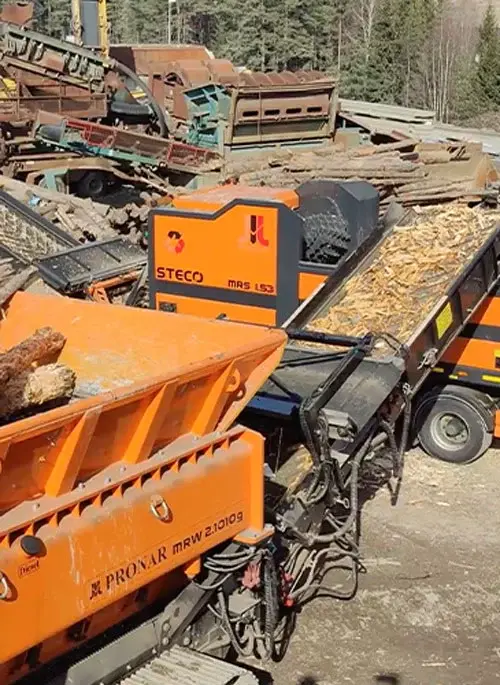
Everything you need to know about shredders
How to choose the right shredder for your operation. Single-shaft, dual-shaft and four-shaft shredders explained.
Contents
Why do we shred?
- Process bulky waste
- Liberate materials locked inside complex products
- Shred to a specification
- Destroy goods or prototypes
- Create valuable material from residual products
- Save money and protect the environment
How to choose the right shredder
First and foremost, the shredder you choose should be capable of performing the job it was purchased to do. To determine your needs we always ask new customers the following:
- What do you want to shred and how large is it?
- What capacity do you need?
- What output size do you require?
- What does your downstream process look like?
Single-shaft or dual-shaft shredder?
Single-shaft shredders often have a cutting knife system that produces homogeneous and predictable sizes. Perfect when you need an exact output size. They feature a screen solution where the choice of screen determines the outgoing material size.
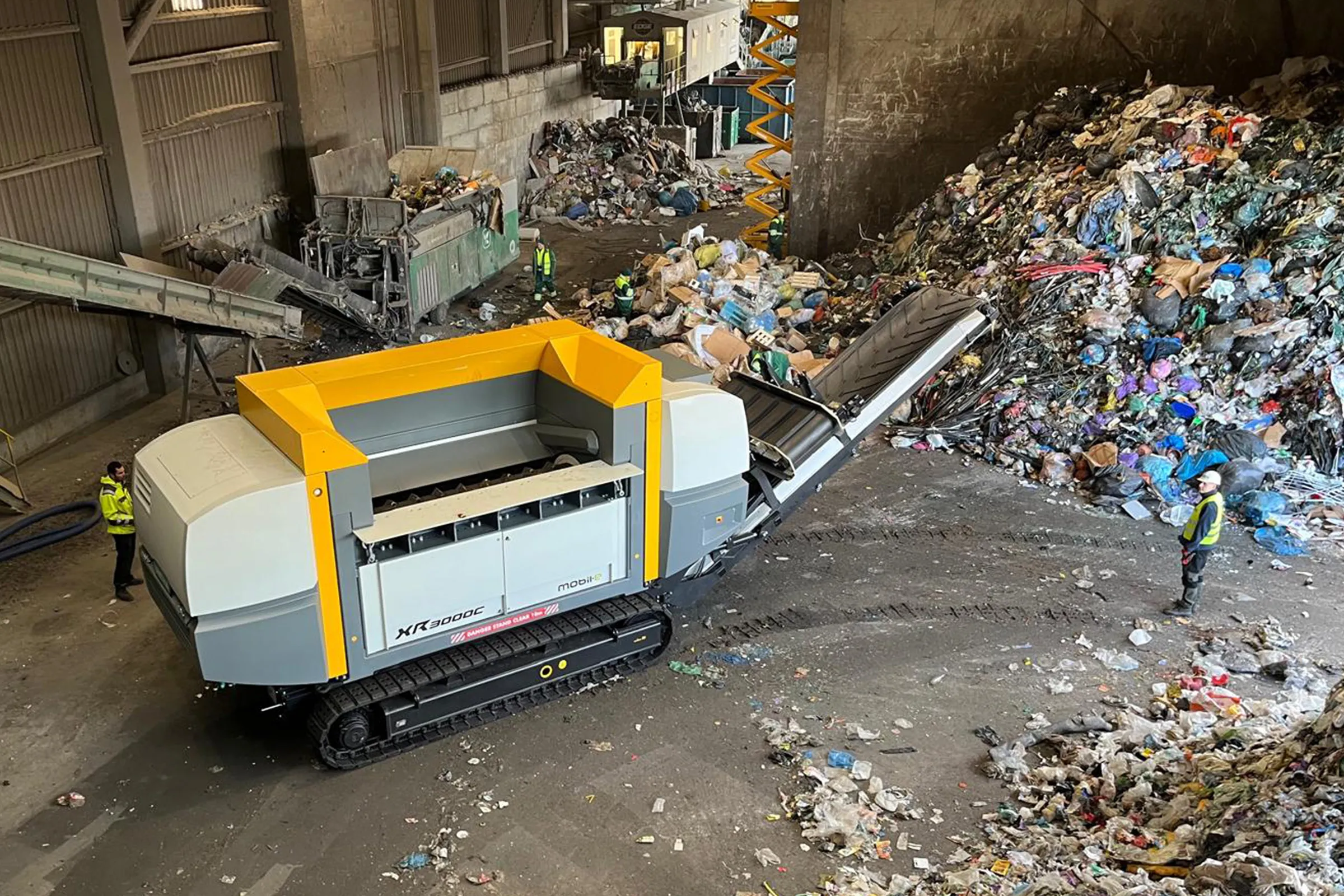
Dual-shaft shredders (crushers) are suited for coarse results and pure size reduction. Greater capacity than single-shaft units. Perfect for reducing transport volumes.
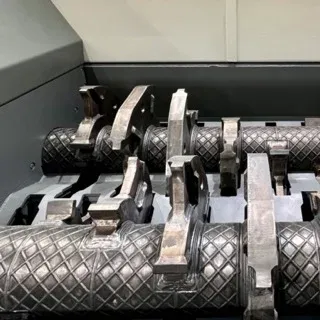
Four-shaft shredders
Slow-speed with many cutting knives in engagement. Excellent for shredding documents and hard drives, but also for general size reduction to small fractions. Low dust and noise levels.
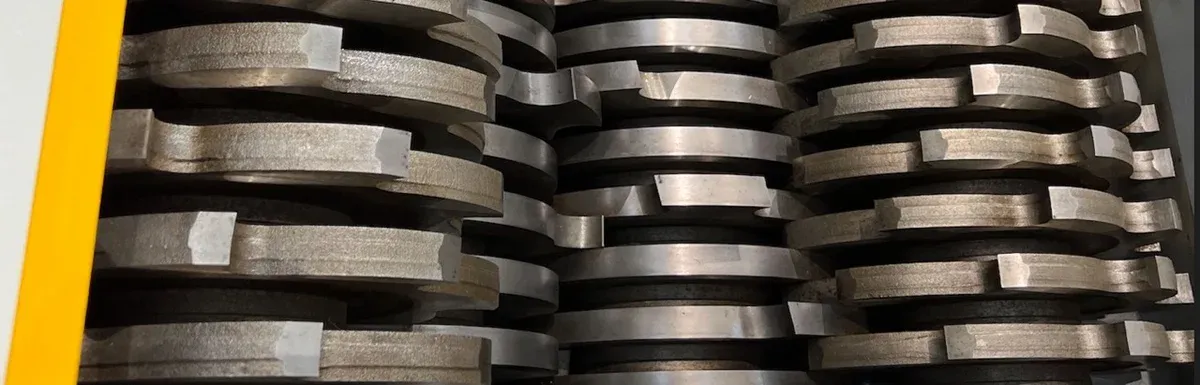
Diesel or electric?
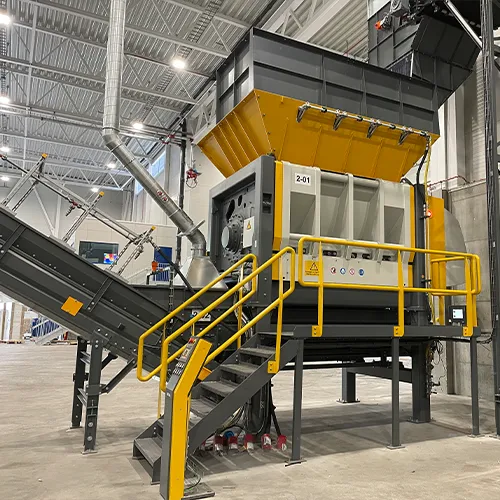
Electric drive can cut fuel costs by hundreds of thousands of kroner per year. Electric shredders also have lower noise levels and maintenance requirements.
However, you must check whether you have sufficient power available at your facility. Also pay attention to the difference between shredders with direct drive versus hydraulic drive – direct drive provides much better energy efficiency.
High-speed or low-speed?
- High-speed (~1,000 rpm): Large capacity and small end fraction. Good for green waste and wood. Produces a lot of fines.
- Low-speed (20–150 rpm): More tolerant of foreign materials. Produces fewer fines. Can compensate with more knives for a finer result.
Ready to choose?
Browse our range of shredders and find what suits your needs.
Related articles
How to reduce downtime on mobile recycling machines
Preventive maintenance, correct spare parts, and clear operating routines deliver more uptime on equipment that is moved and exposed to dust.
Read more →
Mobile or stationary equipment: how to think total cost
Volume, setup time, and transport determine whether mobile recycling equipment or a fixed plant gives the lowest cost per tonne.
Read more →
Manipulators for waste sorting – from robot arms to air jets
A review of different manipulator types that physically carry out sorting work in robotic waste sorting.
Read more →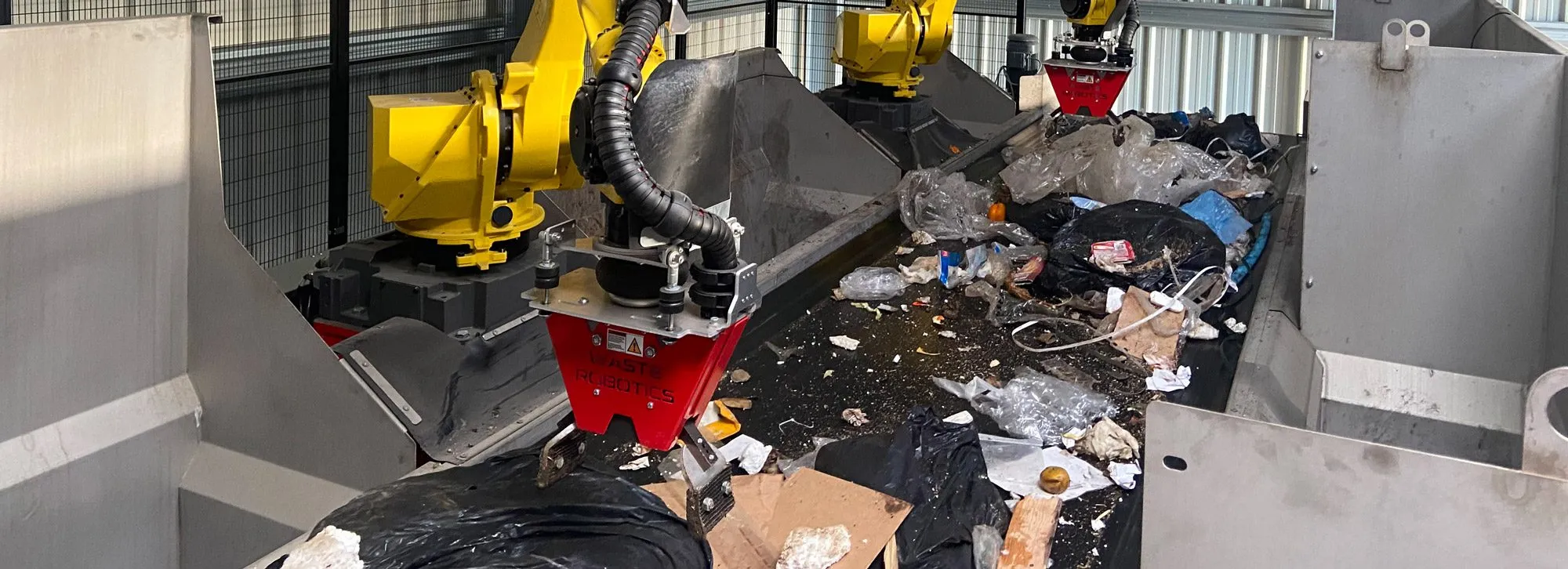
The interplay between detection and manipulation in waste robots
How waste robots depend on seamless coordination between detection systems and manipulators.
Read more →