The interplay between detection and manipulation in waste robots
The critical connection
Detection acts as the robot’s eyes and brain, while the manipulator is its hands. Perfect coordination and communication between these systems is essential for optimal robot performance.
The data journey: From observation to action
Detection and material identification
The process begins with advanced sensor systems scanning waste streams:
- Multi-sensor systems combine different sensor types for comprehensive material understanding
- Hyperspectral cameras identify material types by analysing unique spectral signatures
- 3D cameras map precise object position, height, and shape
- Colour sensors provide visual information that supplements other data
AI algorithms can achieve up to 99 % accuracy in material identification.
Data processing and decisions
Within milliseconds the system must determine:
- Which objects to pick based on material priority
- Optimal picking sequence for efficiency
- How to grasp each object based on size, shape, and material
- Where to place objects after picking
Coordinate conversion and spatial calibration
Exact calibration between the detection system and robot is crucial. An error margin of just a few millimetres can mean the difference between successful picking and failed attempts.
Feedback and continuous learning
Modern systems have continuous feedback loops:
- Every pick result is recorded
- Successful and failed picks are analysed
- Systems learn and adjust continuously
- Algorithms improve over time through machine learning
Challenges in complex waste streams
- Material variation and overlap – Objects come in endless variations, often stacked or partially hidden
- Changing light conditions – Waste plants have variable lighting
- Contamination and dust – Sensors must operate reliably despite exposure
- Variable conveyor speed – Changes in belt speed require compensation
Modern solutions
- Multispectral analysis – Systems can “see through” dust and identify materials under difficult conditions
- Adaptive algorithms – AI systems adjust automatically to environmental changes
- Robust sensor setups – Redundant sensors ensure reliable detection
- Advanced image processing – Algorithms segment overlapping objects
Different manipulator solutions
The same advanced AI detection system can control multiple manipulator types:
Traditional air-jet systems
AI-based camera systems can control the same air-jet systems that traditional optical sorting machines have used for years. The difference is that AI can make material identification much more accurate and flexible.
Mechanical pushers
Fast mechanical “fingers” push selected materials aside, suitable for medium-sized objects on high-speed conveyor belts.
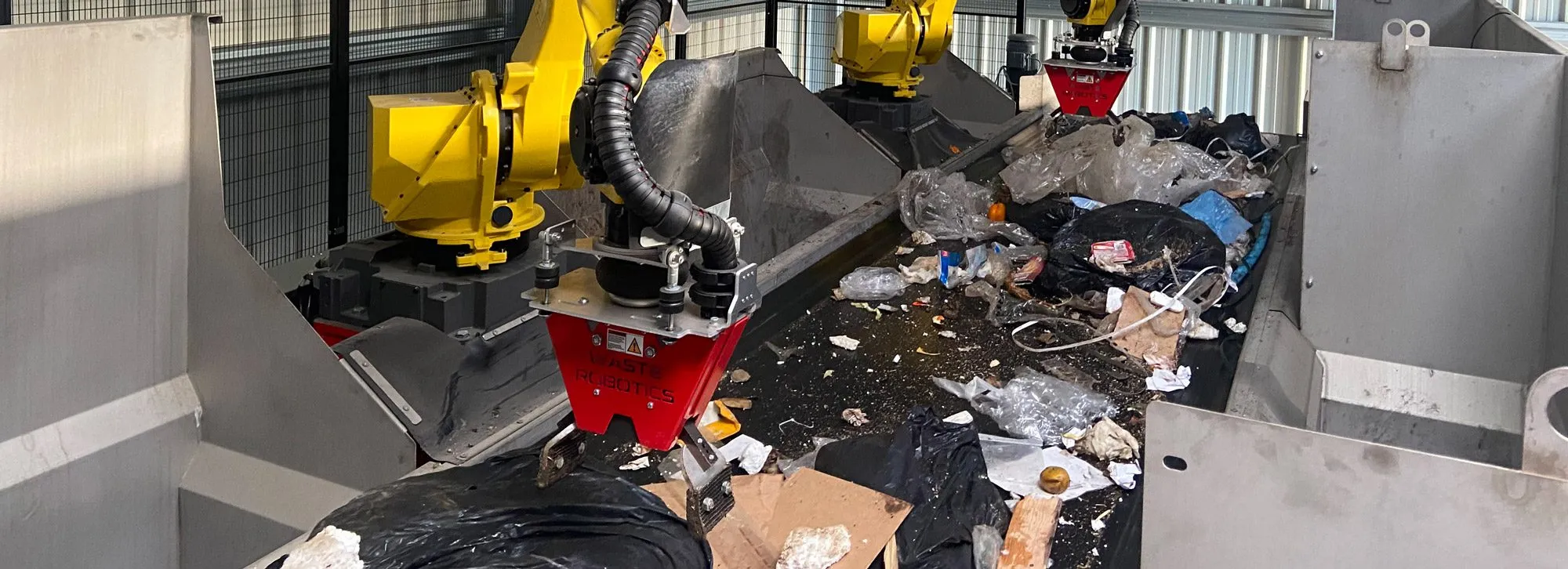
Robot arms with specialised grippers
For larger objects or high precision requirements, arms with specialised grippers pick objects directly from the conveyor belt.
Combined systems
Modern plants often use combinations – air jets for small, light objects and robot arms for larger, heavier materials – all controlled by the same AI detection system.
Balancing speed and precision
Modern systems address this through:
- Dynamic speed adjustment based on material type
- Precision prioritisation for high-value materials
- Optimisation of picking sequence for both speed and precision
- Parallel robot deployment for combined capacity and precision
The future of detection-manipulation integration
- Edge-level AI processing – AI processing moves closer to the sensors
- Adaptive gripping strategies – Next-generation robots adjust gripping strategy automatically
- Collaborative robot systems – Multiple robots communicate to optimise sorting at system level
- Improved tactile feedback – Manipulators with touch sensors provide additional data