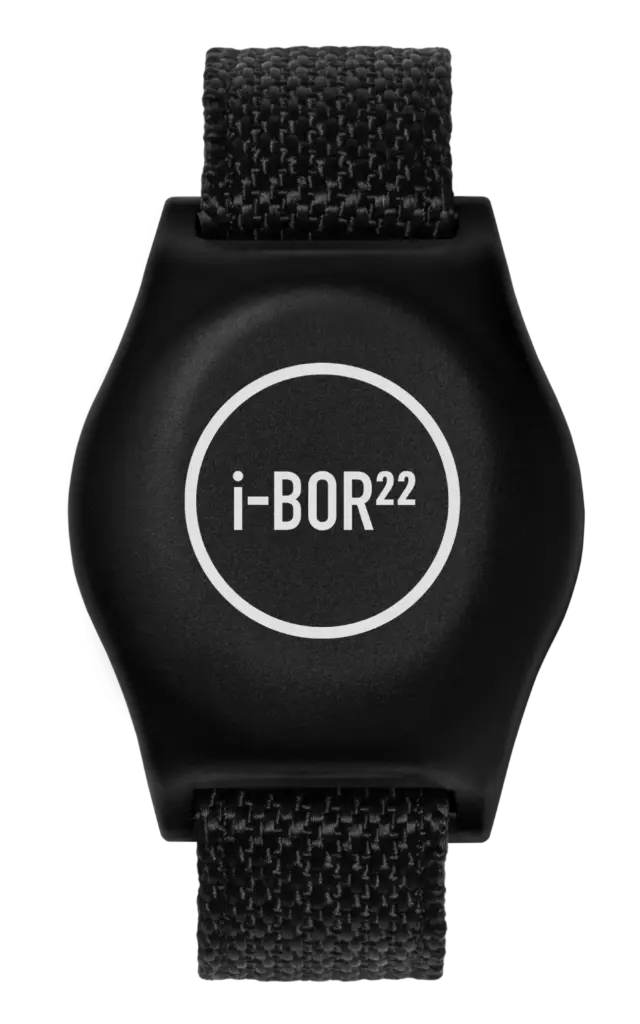
Borema i-BOR 22 – required personal safety at the pit conveyor
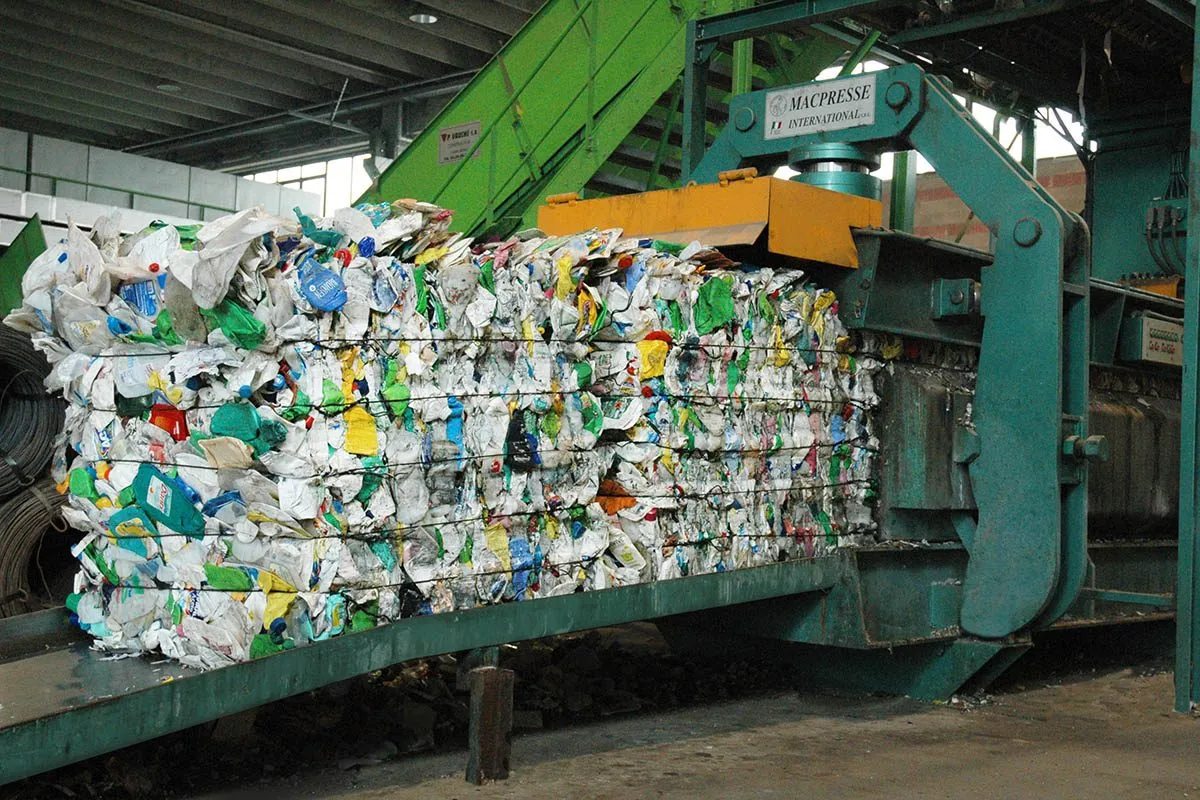
Horizontal balers fed from a recessed (in-floor) conveyor – without guard rails, where a wheel loader or forklift pushes material straight over the edge – require personnel safeguarding under EN 16252:2012. The i-BOR 22 from Borema stops the press automatically and contact-free when a person comes too close, delivering a higher safety level and more functionality than conventional solutions.
What is the i-BOR 22 from Borema?
The i-BOR 22 from Borema is a contact-free, RFID-based personal safety system that stops a press, shredder or conveyor automatically the moment a person enters the danger zone – without that person having to do anything. For horizontal balers with pit-conveyor feeding and no guard rails, this safeguarding is required under EN 16252:2012. The i-BOR stands out from competitors with Performance Level d, two independent tags per person and continuous recognition of authorised personnel – without scanning.
Why personal safety is required at the pit conveyor
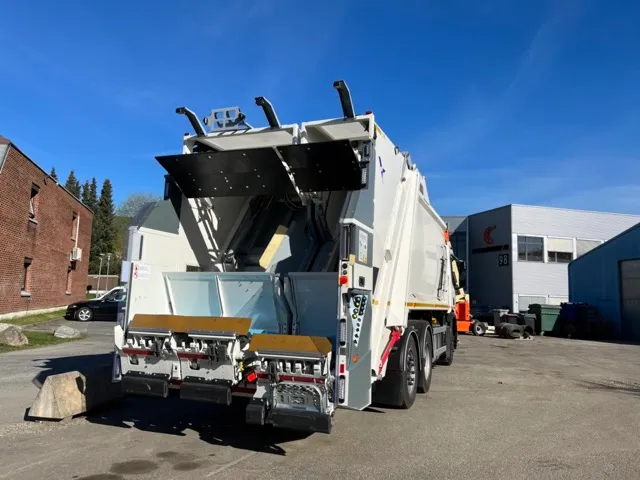
Many horizontal balers are fed from a recessed (in-floor) conveyor – a “pit conveyor” – where a wheel loader or forklift pushes material straight over an edge and onto the belt. When the feed solution has no physical guard rail or other shielding, a danger zone arises: a person can enter the area where material is drawn towards the press.
EN 16252:2012 – the safety requirements for horizontal balers – therefore requires personnel to be protected from being drawn in towards the feed opening. When an existing press is modified, or a new plant is set up, it is the employer’s responsibility to ensure the machinery complies with applicable requirements.
Protects even those who cannot help themselves
Traditional safeguards – pull cords, emergency stop buttons and fences – assume a conscious person who is actually able to act. If someone faints, collapses or is injured, they do not work.
The i-BOR 22 from Borema is an Advanced Personal Security System (APSS) that turns this around: the system recognises people automatically and contact-free via active RFID and stops the press, shredder or conveyor through the emergency stop circuit the moment a person carrying a transponder enters the danger zone – without that person having to do anything.
The solution is built from modules that work together:
- P-TAG – personal transponder. Active RFID device with an individual code. Each user wears two coupled transponders (see below).
- ATM – activation module. Gate frame mounted at the entrance to the danger zone that creates the protective field. Gives visual and acoustic warning, and triggers the stop.
- ALM – logic module. The central unit integrated into the machine’s emergency stop circuit. One ALM can monitor up to 5 feed systems.
- REF-TAG – reference transponder. Monitors the system around the clock. If the test signal fails, the plant goes into emergency stop automatically.
- AUM – access control (option). Controls who can start the plant, with a start-up warning and controlled shutdown.
In addition there are the COM option (OPC UA / Web Cloud) and the ETM option (self-test module for the annual functional check of the transponders).
Two independent safety tags per person
Each user always wears a coupled pair of P-TAGs. This gives three concrete benefits:
- Redundancy – the user remains protected if one tag is lost or fails.
- Fault diagnostics – the system can distinguish between a person having left the danger area and a tag having failed. That is a difference single-tag solutions cannot detect. The chance of both failing at once is vanishingly small, so protection is maintained via the remaining tag while the faulty one is flagged for replacement. The result is both higher safety and fewer unnecessary stoppages.
- A prerequisite for PL d – two tags are part of the basis for the safety level, not a standalone add-on.
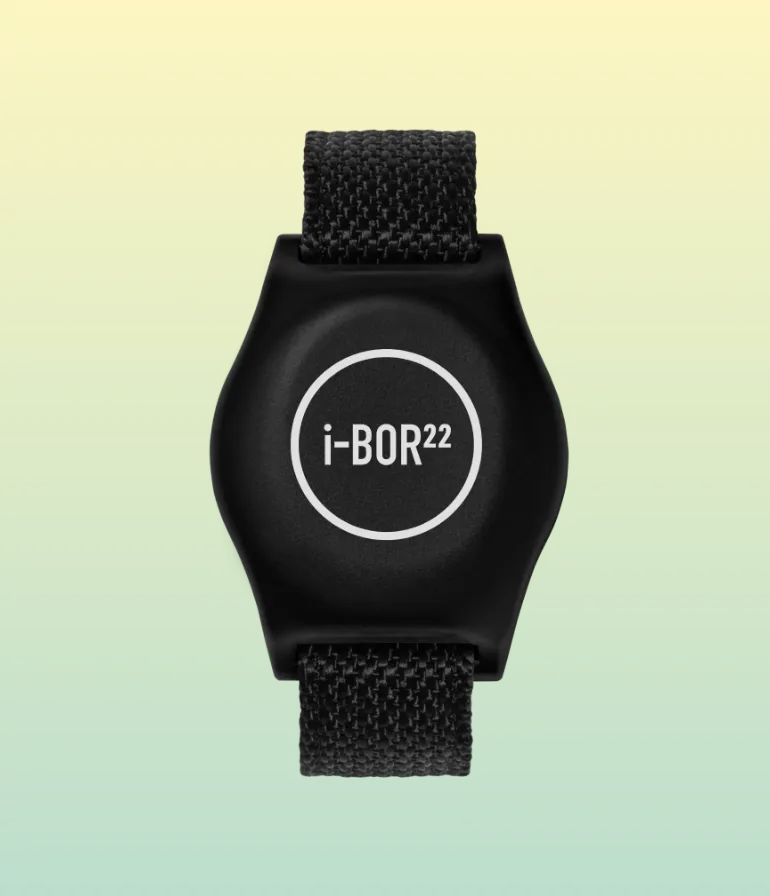
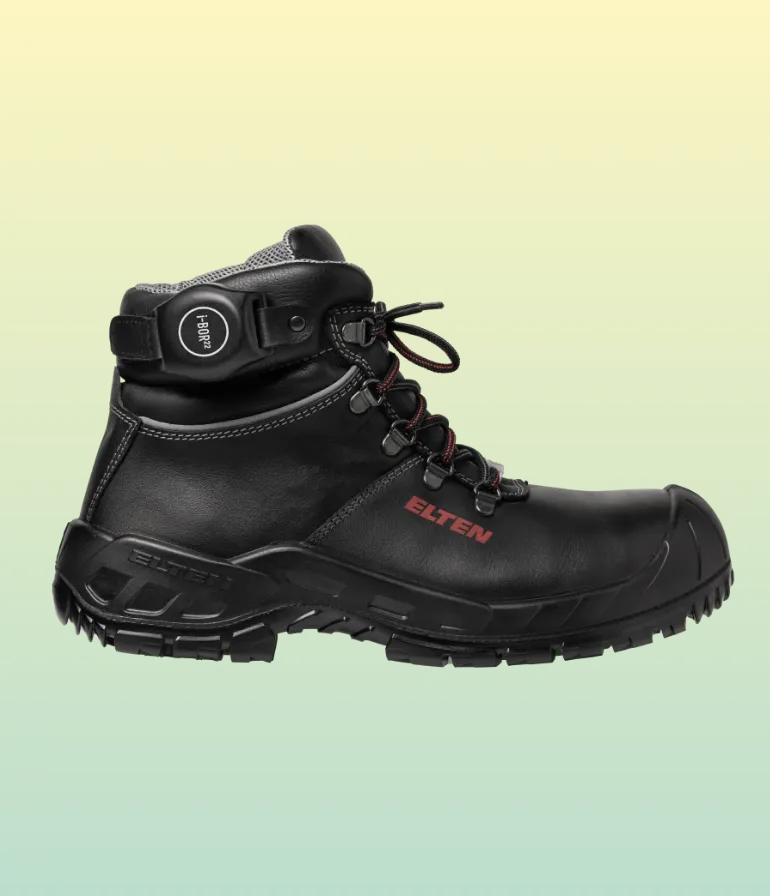
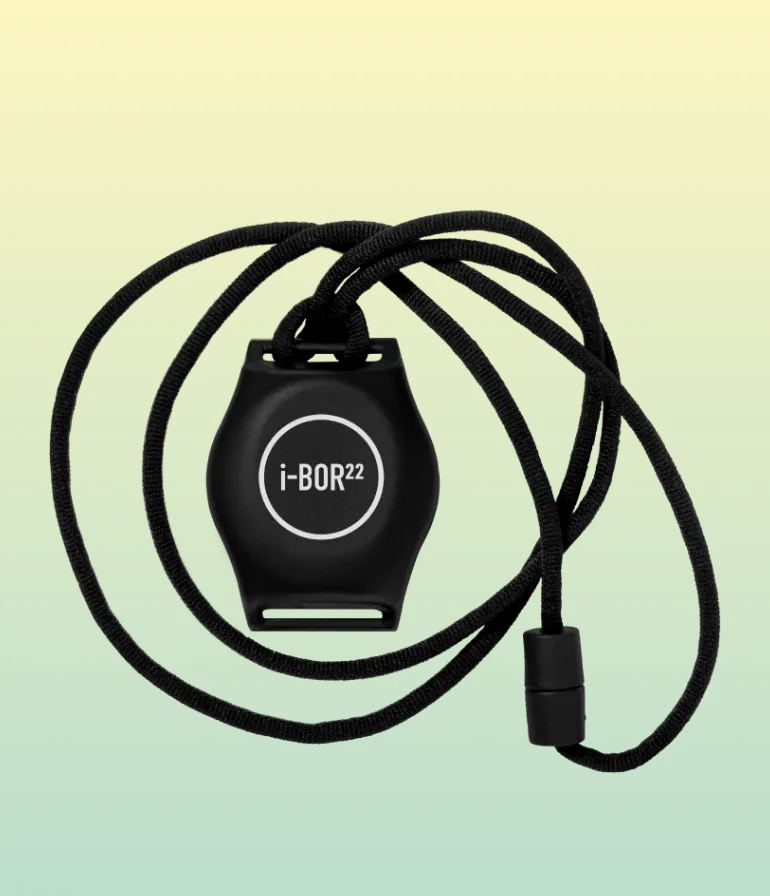
The transponders are battery-powered with monitored battery status and a low-level alarm, and come in three form factors: a button on a strap, a card on the belt, and a watch or boot version (including for ELTEN safety boots).
Recognises authorised personnel – without scanning
Here the i-BOR offers functionality competitors do not have. Conventional solutions typically use a tag held against a reader on the press as a start condition – a deliberate action to confirm that an authorised operator is present.
The i-BOR instead registers continuously that an authorised operator or shift supervisor is physically present in the work area, without anyone needing to scan a tag. In the same way, the plant can be stopped automatically after a preset time interval once the authorised user has left the detection area. This gives proper access control in daily operation without extra routines for the operators.
Higher safety and more functionality than competitors
Where conventional personal safety systems typically reach Performance Level C and cover one feed system, the i-BOR 22 delivers:
- Performance Level d to EN ISO 13849-1, type-tested and certified for all of Europe, EFTA and England – a higher documented safety level.
- Self-monitoring safety PLC with continuous auto-test.
- Up to 5 feed systems on a single logic module, with an adjustable danger zone – fewer units and easier integration in larger plants.
- Scalable across plants – one P-TAG works everywhere in the company, and a single self-test module is enough for the whole business.
- Digital monitoring via OPC UA and Web Cloud, with SMS alerts on emergency stop events and export of the event log.
- Robust for industrial environments – IP54, operation from −20 to +50 °C, unaffected by mobile phones and radio equipment, and a multilingual display.
- Plug-and-play – can be retrofitted to existing presses and lines.
For operators, personal contact-free transponders mean the safeguarding follows the person without daily handling – and that the way the tag is carried can be adapted to the individual workplace.
Flexible ways for operators to carry the tag
Each user wears a coupled pair of P-TAGs. The transponders come in several form factors and are worn however the individual prefers – as a wristwatch, integrated into a safety boot, or as a button on a neck strap with a safety fastening.
How we assess the safeguarding need with you
- Mapping the press, feed solution and how personnel move around the recessed conveyor – before we recommend a setup.
- Assessment against EN 16252:2012 and documentation of risk when modifying or installing new equipment.
- Configuring the i-BOR 22 with the right number of feed systems, transponders and ways for operators to carry the tag.
- Installation, training and service through Steco – the same contacts as for presses and plants in general.

Does the plant need to meet EN 16252?
Send us a short note about the press and feed solution – we will assess the need and propose the right i-BOR setup.