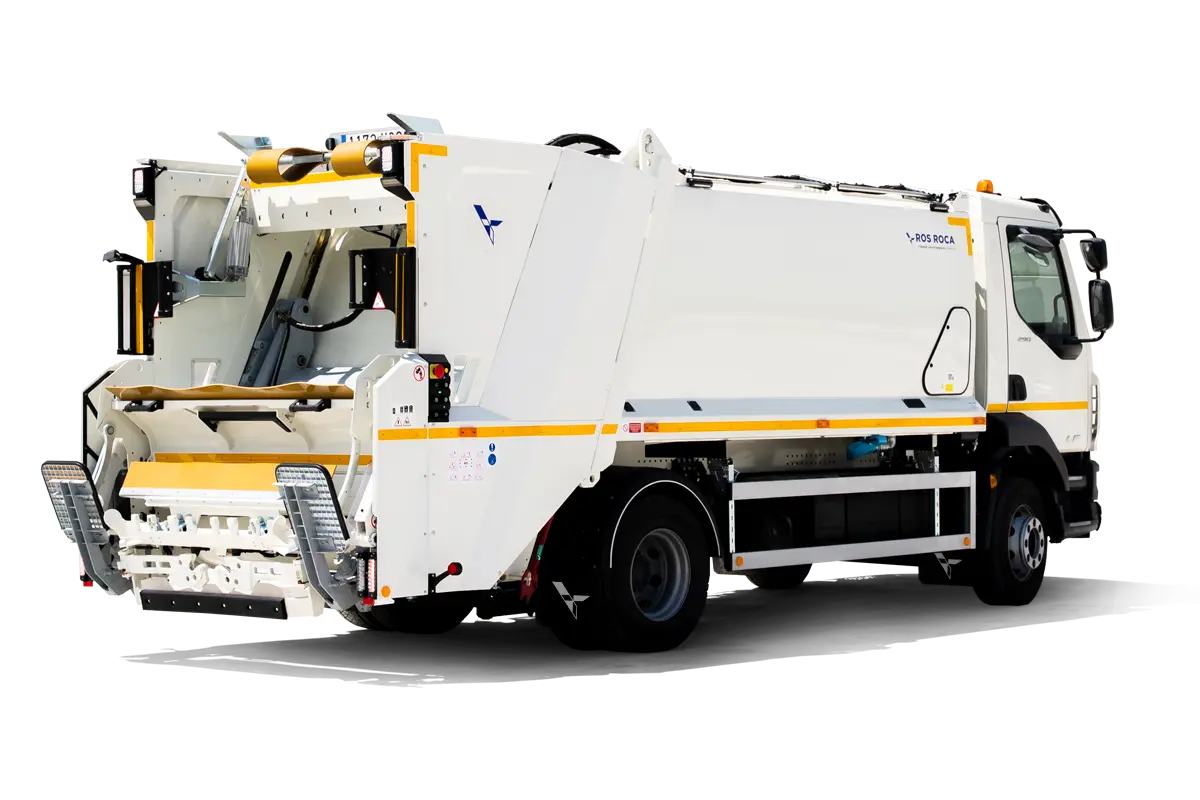
Commercial waste and industry
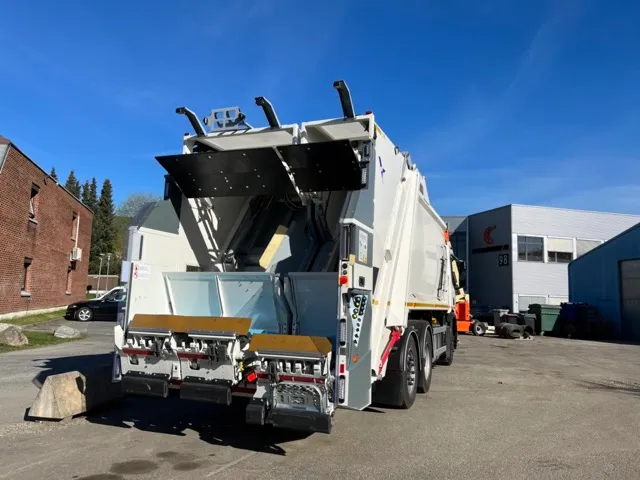
Single-compartment rear loaders with winch for container emptying. Robust solutions for high volumes and heavy materials.
Commercial and industrial waste places different demands on collection vehicles compared with household waste collection. Volumes are larger, materials are heavier, and collection points can range from goods-in areas in basements to open industrial yards with heavy-duty containers. The vehicles must be robust enough to handle this daily, year after year.
What is commercial waste?
Commercial waste is waste generated by businesses – shops, offices, restaurants, warehouses, manufacturing firms and construction sites. Unlike household waste, volumes can vary significantly from one collection point to the next, and the materials are often heavier: cardboard, glass, metal, food waste in large quantities and various types of production waste.
Container sizes are correspondingly larger. Where households use 140- or 240-litre bins, 660- and 1,100-litre bins are common in the commercial sector. Many businesses also have freestanding containers that must be emptied by winch.
Demanding collection points
Commercial waste collection often takes place under challenging conditions. Goods-in areas and waste rooms can be tightly situated, with low ceiling heights or tight turning spaces. The driver must manoeuvre precisely, and the equipment must function reliably even under pressure.
Weight is another factor. A fully loaded 1,100-litre container can weigh several hundred kilograms, and the vehicle will handle large accumulated loads during a working day. This places demands on both lifting mechanisms and the vehicle’s total payload.
Terberg rear loaders for commercial and industrial use
Terberg rear loaders are engineered precisely for this application. The bodywork is built for heavy daily loads, and the lifting system is dimensioned to handle everything from standard bins to heavy containers. With a winch, the vehicle can empty freestanding containers without the driver needing to move them manually.
The rear loaders can be configured for different bin sizes, making it possible to serve the customer base with one and the same vehicle – whether it involves 660-litre bins at a bakery or larger containers at a warehouse.
For operations with high payload requirements, the rear loaders are available on 6x2 chassis. The additional axle pair provides significantly higher permitted payload, allowing the vehicle to be fully loaded without exceeding weight limits – particularly relevant in cities with many collection points per round.
Fraction handling with two compartments
Many businesses are required to source-separate, or wish to keep fractions separated to achieve better terms at the waste reception facility. Terberg two-compartment rear loaders make it possible to collect two fractions in a single trip. The bodywork’s two separate compartments are kept physically separated throughout the entire collection round, and the contents are discharged separately at the reception plant.
This reduces the number of trips and gives the operator more flexible route planning without compromising sorting requirements.
Maintenance and support
Steco has a workshop in Drammen and performs service and maintenance on Terberg bodywork. Regular inspection of lifting mechanisms, winch and compactor systems is essential to maintain operational reliability in demanding commercial waste collection.
Suitable solutions
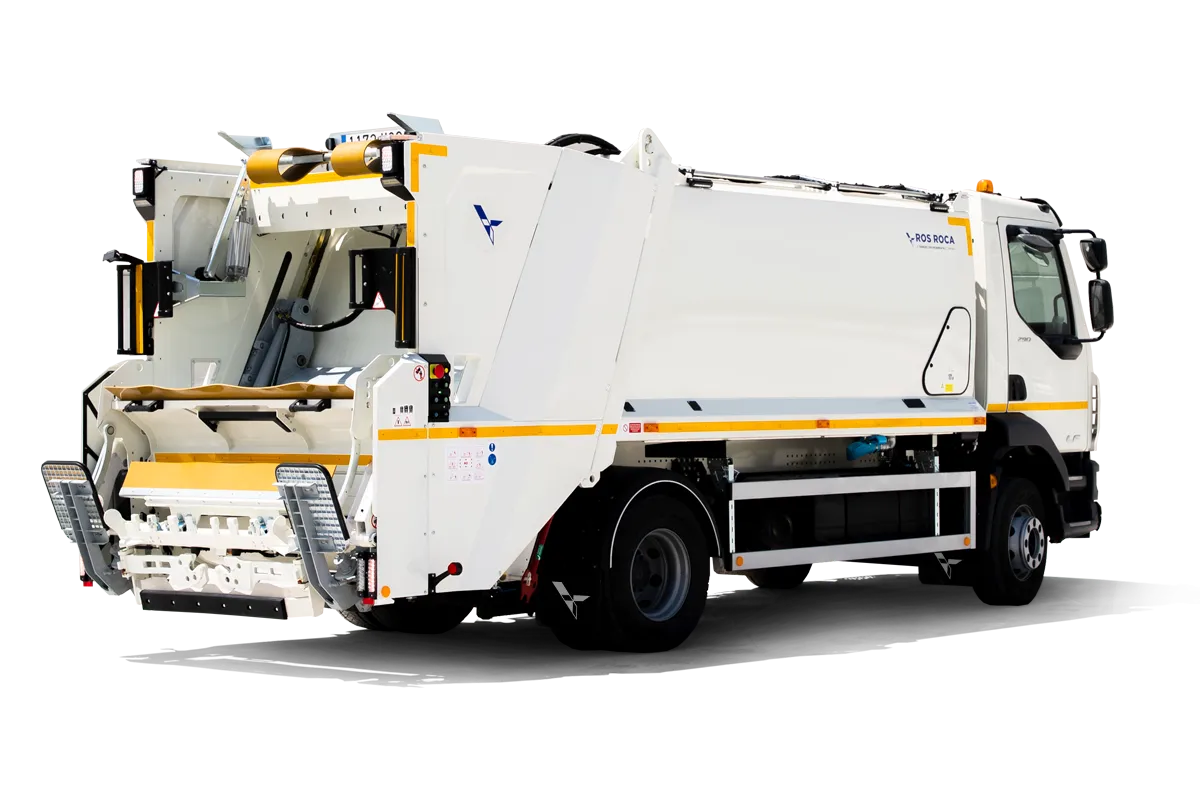
Products that are suitable for commercial waste and industry.

Not sure what you need?
We help you find the right solution — no obligation.